
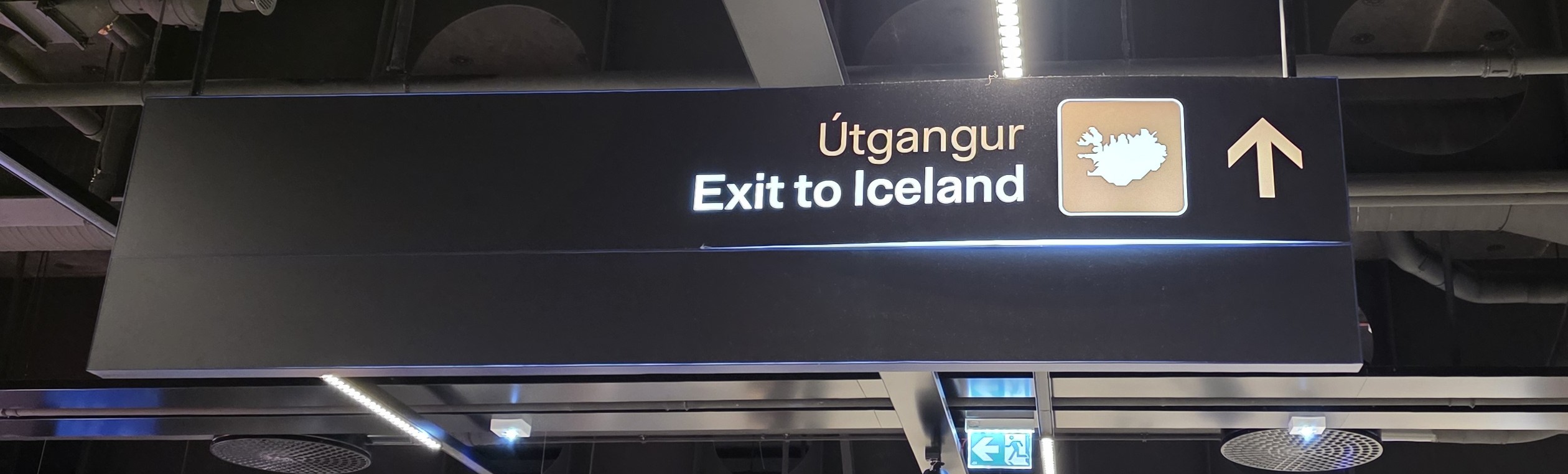
When I started to plan my trip to Iceland and began to research how to get around, there was one piece of advice on which many travel bloggers seemed united: rent a car.
The advice is without a doubt sound. Cars give you ultimate freedom and flexibility, especially since public transport only services small sections of the island, and the car allows you to travel at your own pace and get deep into those remote areas. Yep, it’s good advice, and it’s advice that I will follow when I visit Iceland again. But I did not rent a car on my first trip to Iceland. Iceland was my first stop on a larger backpacking trip, and the prospect of renting a car, driving it in an unfamiliar place, and having to make decisions related to driving on top of all the other decisions and new things I was trying just seemed like biting off more than I was willing or able to chew. Instead, I used public transport, local tours, and my two feet to get around. Even with just walking around Reykjavík and doing tours that took me outside of the city, I still saw many magnificent sites and got to experience Iceland’s beauty. I’m sure there are experiences I missed and essentials I didn’t see, but I was thrilled with my experience and had a perfectly satisfying first visit.
If you’re wondering whether you can still have a great trip to Iceland without renting a car, keep reading to find out how my experience went, what I got to see through tours, and the pros and cons of traveling without a car at your disposal. If you’re on the fence about renting a car, I hope this helps you decide. If you have already opted to not rent a car and you’re worrying about missing out, I hope to ease some of those worries.
Getting from Keflavík International Airport to Reykjavík
If you’re planning a trip to Iceland, you’ve probably searched for flights to Reykjavík, Iceland’s capital. However, when you book your flights, you won’t be landing in Reykjavík – you’ll be landing at Keflavík International Airport, which is about 45 minutes from Reykjavík. Luckily, it’s really easy to get from Keflavík to Reykjavík. Since many travelers flying into Iceland plan to go to Reykjavík, there is the Flybus to shuttle people from the airport to the Reykjavík BSÍ bus terminal. The bus leaves frequently, at least once an hour. When you land in Keflavík, you can buy a ticket at the desk or from a machine. After you buy your ticket, you just have to meet your bus, and it will take you to the BSÍ bus terminal in Reykjavík. From there, you can catch another bus towards your final destination. I believe there’s also a way to arrange a transfer in advance so you don’t have to figure it out at BSÍ, but I just checked the bus schedule when I arrived and caught the bus that dropped me off down the street from my hostel.
What I Did in Reykjavík on Foot
Though Reykjavík does have a bus system, I opted to walk most places. My hostel was downtown, and from there I only had to walk a few minutes to reach most of Reykjavík’s iconic sites. I found Reykjavík very walkable, and I liked being able to take my time, stopping to investigate places and things that caught my attention. Some of the places I visited on foot are discussed down below.
Skólavörðustígur – The Rainbow Street
Skólavörðustígur, a famous street in Reykjavík, is instantly recognizable for its painted rainbow. The vibrant colors stretch uphill towards the church Hallgrimskirkja (more on that next) at the top of the street, and a series of shops and restaurants line each side of the street, many leaning into the rainbow theme.
The road is an emblem of Reykjavík’s support for the LGBTQIA+ community and its attitude towards diversity and equality. The road was first introduced in 2015 during the city’s Pride festival and was meant to be a temporary installment, but it proved to be popular with locals and tourists alike. The fixture became permanent and now, every year during Reykjavík Pride, the city comes together to repaint the road.
![20260518 143420[1]](https://jessintransit.com/wp-content/uploads/2026/06/20260518_1434201-1-768x1024.jpg "Do You Need a Rental Car in Iceland? Here’s What My Trip Was Like Without One")
Hallgrimskirkja
Hallgrimskirkja is a Protestant Lutheran church and Reykjavík’s most iconic building. The church is known for its height, standing at 74.5 meters, and its striking façade comprised of cascading columns. The architect, Guðjón Samúelsson, designed the church to incorporate elements of the Icelandic landscape. The white exterior evokes the country’s glaciers, the tower brings to mind the imposing mountains and volcanoes, and, perhaps most notably, the pillars that create the silhouette are inspired by the columnar basalt formations found across Iceland. In front of the church is a statue of Leif Erikson, the Norse explorer widely believed to have reached the Americas before Columbus (and, of course, the star of SpongeBob and Patrick’s favorite holiday).
![20260518 144634[1]](https://jessintransit.com/wp-content/uploads/2026/06/20260518_1446341-768x1024.jpg "Do You Need a Rental Car in Iceland? Here’s What My Trip Was Like Without One")
Harpa Concert Hall and Conference Center
The Harpa Concert Hall and Conference Center is Reykjavík’s cultural and artistic hub. Home to the Iceland Symphony Orchestra and the Icelandic Opera, Harpa also hosts global conferences, theater performances, and concerts (apparently Patti Smith was there in the weeks after I left). Even if you can’t catch a performance, the building itself is a work of art worth seeing. Like Hallgrímskirkja, Harpa’s design draws inspiration from Iceland’s basalt landscapes. The windows are hexagonal glass panels that catch the light, creating a kaleidoscope effect and reflecting the colors of the sky and the nearby sea.
![20260518 134234[1]](https://jessintransit.com/wp-content/uploads/2026/06/20260518_1342341-1024x768.jpg "Do You Need a Rental Car in Iceland? Here’s What My Trip Was Like Without One")
Sólfar (Sun Voyager)
Sólfar (Sun Voyager) is a stainless-steel sculpture shaped like a long boat with figures meant to represent voyagers in the middle, paying homage to the Scandinavians who first came to Iceland and celebrating exploration and discovery. You encounter the piece as you walk along Sæbraut Road, where you will not only see a few sculptures and statues, but you will also be walking alongside Faxaflói Bay. As you walk, you’ll hear water lapping the shore, you’ll breathe in the fresh, sharp wind as it sweeps off the sea, and you’ll see a towering mountain range that includes Mount Esja across the bay. When you face the direction of the Sun Voyager, turning your back on the city, you can imagine how those voyagers felt, setting out for adventure and new worlds.
![20260518 171554[1]](https://jessintransit.com/wp-content/uploads/2026/06/20260518_1715541-1024x768.jpg "Do You Need a Rental Car in Iceland? Here’s What My Trip Was Like Without One")
Bookstores
Poetry and books have a special place in Icelandic culture. In fact, Hallgrimskirkja is named after the poet Hallgrímur Pétursson, who wrote the Passion Hymns, which explore the Passion narrative. The country also boasts high rates of literacy and publication. As a ravenous reader and wannabe writer, I couldn’t resist checking out a few of Reykjavík’s bookstores, knowing how crucial books are to their society, and I’ll discuss just a couple that I visited, though there were quite few.
I first went to Eymundsson, the most well-known bookstore chain in Iceland. This particular location had several floors that included spaces for poetry, writing materials, novels, children’s books, and a café. From what I saw, they had books in Icelandic and English, and there was a section dedicated to Icelandic literature, which included the works of Halldór Laxness (click here if you want to learn more about his novel Independent People, which I read before visiting Iceland), a collection of the various Viking sagas, a selection of crime novels, and more.
At one point, I found myself perusing the children’s books, where I found one by Linda Olafsdottir called I Dare! I Can! I Will! The Day the Icelandic Women Walked Out and Inspired the World. The picture book tells the story of October 24, 1975, when Icelandic women demanded equality and change by taking the day off from their jobs as well as their roles as wives and mothers. I was delighted to have stumbled across such an interesting piece of Icelandic history that I may not have heard about otherwise.
![20260518 124203[1]](https://jessintransit.com/wp-content/uploads/2026/06/20260518_1242031-1024x768.jpg "Do You Need a Rental Car in Iceland? Here’s What My Trip Was Like Without One")
Another shop I checked out was Hús máls og menningar (aka The Old Bookshop), which is a combination of bookstore, bar, and music venue. During the day, it has a quiet, cozy atmosphere, with plenty of books to examine across two floors. But in the evening, The Bookstore Band, one of Iceland’s best-known cover bands, take the stage. I went there my first night in Reykjavík. Let me tell you, there is nothing like being surrounded by books and dancing with a bunch of locals and tourists while a cover band is performing “Dancing Queen” to make you believe every decision you made to get you to this moment was right.
These are just a few of the main sites I sought out while walking around Reykjavík, but there are other things you can check out depending on your taste and budget. For those wanting to relax, there are opportunities to visit the thermal pools and spas; there are walking tours available with local guides, so you can go around the city and learn a bit of history; there are a variety of museums, ranging from thehistoric (National Museum of Iceland; Icelandic Museum of Natural History), to the zoological (the Whales of Iceland museum), and to the specifically biological (The Icelandic Phallological Museum); or there are parks where you can sit out and enjoy the local art with a book or a coffee (depending on the weather, of course).
Now, again, I was in central Reykjavík, so a lot of these were close to me. There are some hotels further from downtown where reaching these sites might prove more difficult. So, if you are planning to come to Reykjavík without renting a car, check where your accommodation is in proximity to the major sites you would like to see to determine if those walks would be manageable for you. If they are a bit far on foot, there is always the bus system.
Tours I Took
Whale Watching Tour
On my second day in Reykjavík, I walked about ten minutes to the edge of Faxaflói Bay to meet my whale watching tour. I had booked a ticket with Elding Whale Watching, a family-owned company who have been providing tours for three generations. During the tour, we were lucky enough to see two humpback whales and several puffins, as well as some amazing views of Iceland’s mountain ranges and volcanoes from the water. I always knew whales were majestic creatures, but there is something incredible about seeing such a ginormous animal cut through the sea with grace and ease. I also didn’t think puffins were so tiny.
Everyone working for Elding Whales was passionate and knowledgeable. One of the staff members on the boat was a marine biologist, so they were not only there to educate us but also for their own research purposes. The crew on the vessel were excellent educators, teaching us on whale migrating patterns, behaviors, the species found in the bay, and how to spot them. The crew also demonstrated lots of respect for the whales. When we saw a whale, we were able to wait and observe for a little bit, but then we moved on to ensure the whale didn’t feel crowded. They also educated us on conservation, including talking about their opposition to the controversial whaling industry that still operates in Iceland and discussing the whale meat being consumed purely for tourism, but I’ll discuss that more in a later post.
From what I’ve read about whale watching in Iceland, some people don’t recommend Reykjavík, simply because there are other areas, such as Húsavík or the Snæfellsnes Peninsula, that typically have more whales in their waters, both in terms of number of whales and number of species. There is also the fair criticism that Reykjavík does feel more commercialized, less like an escape into nature, and the waters can be choppier in the Faxaflói Bay than some other areas.
If I do go whale watching again, I would be curious to compare Reykjavík with other places on the island, but for a first experience, I was very satisfied. Like I said, I got to see two whales during my tour, so if you do not have a car and Reykjavík is your homebase for your time in Iceland, there are still opportunities for decent whale watching. I would just consider looking into whale migration to determine the time you’re going to visit and increase your likelihood of seeing whales, if that’s something important to you. Also, keep in mind that by whale watching, you are entering into nature and their habitat, so A.) be respectful and make sure you are booking with an ethical company, and B.) there is no guarantee of seeing whales no matter what tour you book.
![2026 05 19 1300 noor (103)[1]](https://jessintransit.com/wp-content/uploads/2026/06/2026_05_19_1300_Noor_1031-1024x683.jpg "Do You Need a Rental Car in Iceland? Here’s What My Trip Was Like Without One")
South Coast Tour
Oh, the South Coast tour. This was, for me, the highlight of my stay in Iceland. If I were to recommend a single tour, it would be this one. The official name is Iceland South Coast Full Day Small-Group Tour from Reykjavík, from the company Your Day Tours. There were about a dozen of us in a van and the excursion lasted a full day, during which we got to see some of the South Coast’s most beautiful sites, including waterfalls, a glacier, and the black sand beach. Our tour guide was enthusiastic and gave us insights about Iceland as someone who lived there. While he drove and told us facts and stories, we got to take in the scenery, including the mountains and volcanoes, the vibrant green fields, and the roaming Icelandic horses and sheep.
Our first stop was Skógafoss, a waterfall that’s 25-meters wide and plunges from a height of 60 meters. Alongside the waterfall were stairs that went up to the top of the falls, but due to our limited time, I remained on the bottom, watching the waterfall and taking in the mountainous scenery. I was lucky enough to be there in May, when the country was having a stretch of sunny weather, and the scenery around was vibrant, rich, and lush. To my left were mountains, up ahead was a waterfall, the water falling in white veils off the edge of the cliffside, and then to my right were patches of green grass, with sheep and their lambs grazing.
![20260520 120531[1]](https://jessintransit.com/wp-content/uploads/2026/06/20260520_1205311-577x1024.jpg "Do You Need a Rental Car in Iceland? Here’s What My Trip Was Like Without One")
We then made a quick stop in the town of Vík, where we pulled to the top of a hill to visit the Víkurkirkja. A sweet white church with a red roof and steeple, it’s perched on a hill and looks over the picturesque town and the sea below. Fun fact, the architect behind this church was Guðjón Samúelsson, the genius behind Hallgrimskirkja. It was fascinating to see the contrast between the two churches: one simple and quaint, the other complicated and dramatic, both fitting their landscapes beautifully.
![20260520 132524[1]](https://jessintransit.com/wp-content/uploads/2026/06/20260520_1325241-768x1024.jpg "Do You Need a Rental Car in Iceland? Here’s What My Trip Was Like Without One")
After taking in the views, we pressed on towards the black sand beach, Reynisfjara. You might have heard that in February 2026, storms raged through this area and altered the landscape. However, in the months after the storm, the sand had returned and along the side of the cave still stood some of the basalt columns. Though those who had been to the beach before the storm might be disappointed in the alteration, I still found the beach to be beautiful and unique to any other beach I’d seen. I was particularly thrilled that I got to see the columns that inspired the architecture I saw in Reykjavík. Just a warning to be careful near the water. The waves can be intense and come from out of nowhere. You think you know where one is going to peak, crash, and then how high it will creep up the beach, but you will be wrong. So be careful and never turn your back to the ocean.
![20260520 140131[1]](https://jessintransit.com/wp-content/uploads/2026/06/20260520_1401311-1024x768.jpg "Do You Need a Rental Car in Iceland? Here’s What My Trip Was Like Without One")
The penultimate stop was the glacier tongue Sólheimajökull, an offshoot of the Mýrdalsjökull glacier. Because the glacier is surrounded by active volcanoes, its appearance isn’t the blue-white of your standard glacier, but rather alternating layers of ice and ash. There is a sign that says to not approach beyond a certain point without proper gear, so after a bit, I hung back and was able to enjoy the striations and patterns from afar, but there are separate excursions where you can hike the glacier.
![20260520 154604[1]](https://jessintransit.com/wp-content/uploads/2026/06/20260520_1546041-1024x768.jpg "Do You Need a Rental Car in Iceland? Here’s What My Trip Was Like Without One")
The tour ended with the waterfall Seljalandsfoss. Before coming to Iceland, when I saw waterfalls of this magnitude, they were often at a distance. But here we had the chance to be near the waterfall and embrace it. For those willing to get wet, you can approach the waterfall and walk along a path that goes behind it. Waterfalls may have the reputation for being calming and serene, a standard button on old sleep machines, but standing at the base of one is intense and thrilling. The roar and force of the water as it plummets from 65 meters and crashes into the water and rocks below demands your attention. The water sprays up into a chilly mist that settles on you so delicately you don’t appreciate how damp you are until you emerge from behind the waterfall. On nice days, the sun hits the mist just right, and a rainbow is cast at the bottom of the falls. I was elated to not only witness nature but to feel as though I was existing within it. I was giggling like a child.
![20260520 170104[1]](https://jessintransit.com/wp-content/uploads/2026/06/20260520_1701041-768x1024.jpg "Do You Need a Rental Car in Iceland? Here’s What My Trip Was Like Without One")
Needless to say, I recommend this tour. Just be sure to wear your waterproof gear – I had on water-resistant shoes, rain pants, and a rain jacket that all dried quickly once I got in the sun. Even if you do not want to get up close to the waterfall, I would still recommend the gear. Icelandic weather is fickle and it can go from nice to rainy in a second, so it might be nice to have it just in case.
Golden Circle Tour
The Golden Circle tour I booked was larger in terms of both bus size and group size and was essentially a speedrun of the Golden Circle. Our first stop was a quick visit to Þingvellir National Park, specifically to see where the cliffs and crags had formed due to the separation of two tectonic plates. We spent some time looking at the vast views and listening to our guide tell us how this area was the birthplace of Icelandic democracy. It was here the Vikings created the meeting site for the Alþingi (the National Assembly), neutral territory where they could settle feuds, carry out justice, and govern themselves.
![20260521 105404[1]](https://jessintransit.com/wp-content/uploads/2026/06/20260521_1054041-1024x768.jpg "Do You Need a Rental Car in Iceland? Here’s What My Trip Was Like Without One")
After enjoying the views, we were shepherded to the Haukadalur Geothermal Area, where we got to witness some of the geothermal activity, the pools bubbling and slurping like cauldrons and the steam rising up from the ground. I’ve only ever seen similar activity in Yellowstone, and I love how eerie and otherworldly it feels to walk alongside them. For many travelers, the highlight of this section was watching the geyser Strokkur erupt. Going off roughly every seven minutes, visitors watch as the water bubbles and then suddenly retracts to either side of the bowl before shooting 20-30 meters in the air, sprinkling hot water on the guests.
Our final stop was Gullfoss, Iceland’s largest and most famous waterfall. A word to describe this waterfall: ferocious. The water falls down two tiers into a canyon below, dropping approximately 37,000 gallons of water per second during the summer season. There is also a monument to who is considered Iceland’s first environmentalist, Sigríður Tómasdóttir. She is credited with saving Gullfoss after leading a campaign to protect it from industrialization after the water rights to the Hvítá River, which feeds Gullfoss, were sold to foreign developers to create a hydroelectric dam. She met with government officials at Gullfoss repeatedly to protest their actions, at one point even threatening to throw herself into Gullfoss if construction on the dam began. Her efforts brought tourism to Gullfoss, which helped in the decision to never build the dam. So, you get to enjoy a badass waterfall and story about an equally badass Icelandic woman.
![20260521 141130[1]](https://jessintransit.com/wp-content/uploads/2026/06/20260521_1411301-768x1024.jpg "Do You Need a Rental Car in Iceland? Here’s What My Trip Was Like Without One")
A Quick Chat About Cost
For the sake of transparency, here is a breakdown of how much these tours and transport cost (Note: I’m not counting whale watching in this cost breakdown because it did not impact costs for transportation, since I walked to the bay from my hostel. But, for those curious, it cost $105 for three-hour tour – cue the Gilligan’s Island theme). Here is down the rest of it looked:
- Transportation – $69. For the Flybus and public transport, I spent about $69. That’s around $32 for each Flybus ticket, plus the $5 for riding a public bus. I only took the bus once, electing to walk all other times, including back to BSÍ when I was ready to go back to the airport.
- South Coast tour – $148
- Golden Circle tour – $87
That means I spent about $304 on transportation and tours over the course of five days. The cost of a rental car in Iceland will vary based on the season you visit, the type of car you want to rent, and how soon in advance you book your rental. According to this post from All Things Iceland, smaller cars can easily be $150–$200 per day and, summer travelers can spend anywhere between $600–$1200 on a car for five days after factoring in gas and insurance. Additionally, there is a new kilometer-based road tax system that went into effect in 2026, which will also impact the total cost of renting a car.
So, if these figures and my math are correct, it would have cost me more to rent a car. That being said, I am a solo traveler, so I was only booking with myself in mind. If I was traveling with someone else or a group of people, it might have been more cost effective to rent and split the cost of the car, insurance, and gas, as opposed to buying tour tickets for each person.
The Pros and Cons of Taking Tours and Not Renting a Car
The Pros
- No Decision-Making Stress: All your decisions are made during the booking and planning phase of your trip. Once you make the reservations and book your tickets, you just have to show up. The rest of the time you are at the mercy of your tour guides, who tell you where you’re going, how long you’re staying there, and will handle all the driving. It’s nice not to feel responsible for your itinerary or the pressure of navigating unfamiliar roads. Just keep in mind tours can sell out, so book well in advance!
- Hitting the Highlights: Selijalandsfoss, Sólheimajökull, Reynisfjara, Gullfoss, Strokkur, I got to see them all and be absolutely mesmerized, and I got to share the experience with other people on my tour.
- Sleeping and Safety: This might sound strange, but hear me out. I’m someone who gets sleepy quickly when driving, especially on long trips when there is no one there to keep me awake/entertained or to trade off driving responsibilities. I could just imagine the disasters I could have encountered while driving in Iceland, especially since my sleep schedule got messed up after not being able to sleep on my night flight. I also completely forgot until my first night there that the sun does not set in the summer until very late at night. Though this was incredibly cool, it really threw off my sleep schedule for a few days. During the long bus rides, I was able to enjoy the scenery, but I was also able to take brief, much needed, power naps. Had I not been in the car, I might have been too tired to enjoy the experience, or I might have talked myself out of exploring the scenery at all because I knew it could be dangerous for me to drive.
- Meeting People: Going on the tour meant having to be in the same vehicle with people for hours, fostering the chance for conversation and connection. If you are solo traveling, it’s nice to have the chance to chit-chat with people about their experiences and share in the wonder together.
- Informed Tour Guides: The tour guides were fun and gave told us stories and facts about Iceland we may not have learned about otherwise. While we drove, we were able to listen to stories about notable figures like Harold the Fair Haired, the folklore about the hidden people, and the evolution of Iceland over the centuries, deepening our understanding of the country we were visiting and, often, how the nature we were witnessing shaped the stories.
The Cons
- Tight Time Limits: The tour guides are on a tight schedule and, as a result, so are you. In places like Þingvellir National Park, even our own tour guide said, you could easily spend several hours, but we could only be there for about 30 minutes, enough to quickly look around and get some pictures. At some locations, the time allotted is plenty, but at others you might feel rushed. There’s also the chance at being frustrated with your bus mates if they do not return to the bus at the designated time, because you know it means less time at the next stop in order to remain on track.
- Scratching the Surface: The tours are designed to get you to the most notable spots. While these spots are, of course, famous for a reason, you are just hitting the highlights. You are not getting off the beaten path and discovering hidden gems.
- Crowds: Again, you’re in the most popular spots, which naturally means more people. Tourism is the number one industry in Iceland, so at any given stop you will see several tour buses just like the one you’re on, plus all the people who have rented cars and ventured out to the same spots.
My Verdict
For my first trip to Iceland, I had a genuinely great experience without renting a car. The tours allowed me see some of the highlights, gave me a meaningful introduction to the country, taught me interesting history, and introduced me to some lovely people along the way, all while taking a lot of the decision-making and driving stress off my shoulders. That being said, I am looking forward to returning someday, hopefully with friends, and it would be nice to rent a car, set our own pace, and explore the rest of the country.
So if you’re on the fence, take all of this into consideration, and know that, at least in my experience, it’s absolutely possible to have a fantastic time in Iceland without renting a car.