

It goes without saying, yet here I am typing it anyway, that one of the best ways to experience a country and its culture is through its food. Sometimes that means stepping outside of your comfort zone by eating animals or animal parts you may ordinarily forgo and trying different preparation methods, and it’s one of my favorite aspects of travel. So when I told people I was going to Iceland, they assumed I’d be trying hákarl (the famous fermented Greenland shark), chowing down whale, and dining out on puffin because people tend to believe that these are staple foods in Iceland.
However, after a little bit of research, I decided I would not be partaking in any of these meats. This is not a rebuke of Icelandic culture but rather reflects my newfound understanding that these foods, though connected to Icelandic history and tradition, are not staples of the modern Icelandic diet and their consumption raises conservation concerns many Icelanders share.
Why I Didn’t Eat Certain Meats in Iceland
The animals found in Icelandic waters, including the fin whales, the Greenland shark, and Atlantic puffins, are not exactly thriving in the wild. Threats impacting these species include climate change, reduced prey availability due to overfishing, and hunting, even though Icelanders do not regularly consume them. Locals may once have eaten shark, whale, and puffin more regularly, back when trade to the remote island was limited and hunting was necessary for survival. However, in the present day, these meats have become less central to the average Icelander diet, since trade and food supplies have changed and conservation had become a concern. According to Lonely Planet: Iceland, 12th Edition, citing a 2017 Gallup poll, 81% of Icelanders had never eaten whale meat and only 1% ate whale meat regularly.
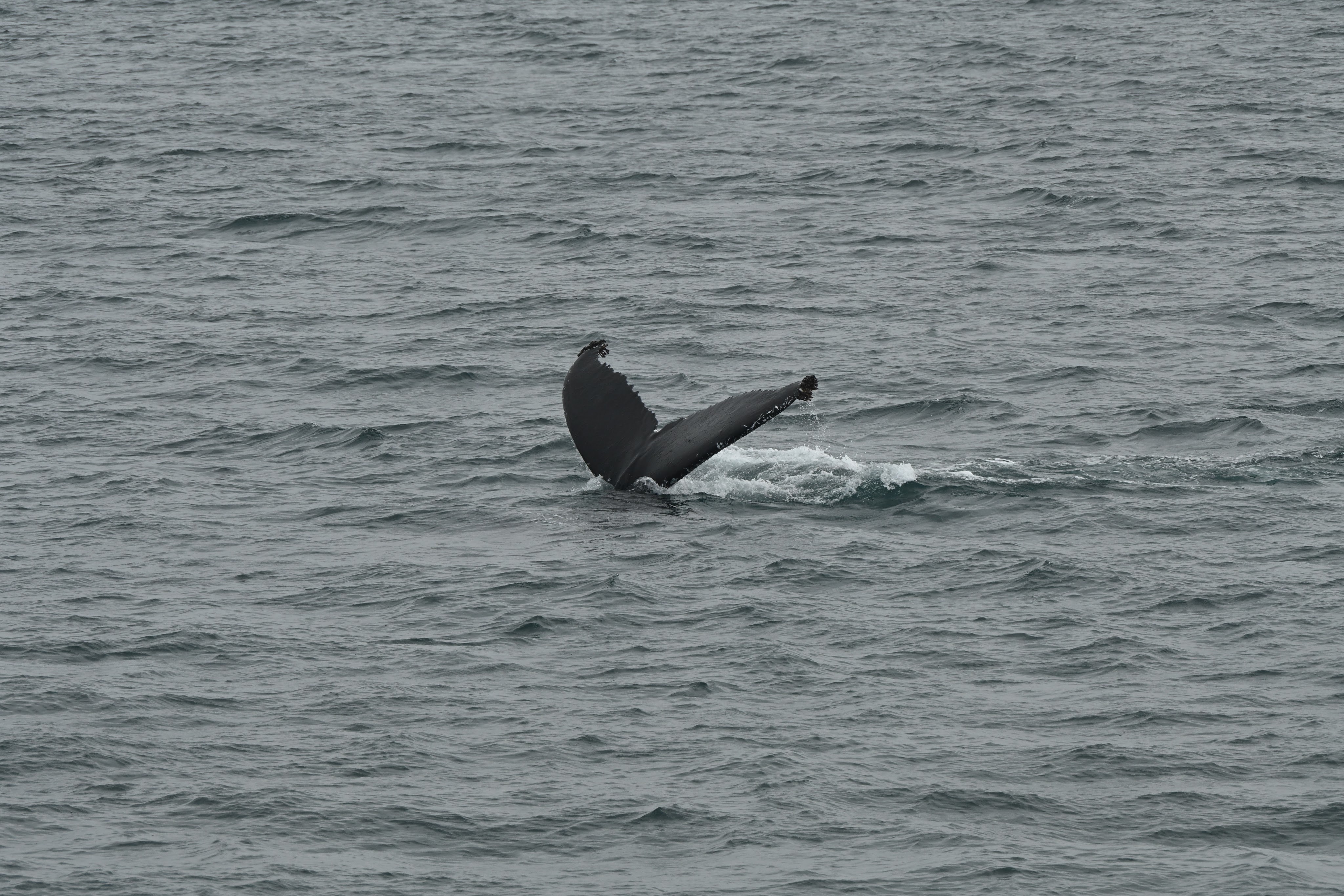
As I mentioned in a previous post, I was lucky enough to go whale watching in Iceland. The tour guides taught us about Iceland’s history of whaling, which dates back as far as the ninth century, when it was conducted on a small scale, but it experienced a boom in the mid-twentieth century after foreign influence and interest. Today, Iceland, Norway, and Japan are the only countries that still allow commercial whaling. In Iceland, there was a two-year pause, but the commercial whaling resumed in June 2026, with its permits allowing the limited hunting minke and fin whales. Almost all Icelandic fin whale meat is exported to Japan, while minke whale meat has historically been sold in Iceland, particularly by restaurants catering to tourists. According to the Lonely Planet book I referenced earlier, an estimated 60% of the whale meat consumed in Iceland is by tourists.
From what I can gather during my research and during my time in Iceland, meats such as puffin and shark are associated with regional traditions and seasonal celebrations, not commonplace meals. Puffins are important to the Westman Island communities and are consumed at festivals such as Thjodhadid, which is held the first weekend in August, or at Christmastime. Then there is a Þorrablót, Iceland’s midwinter festival, where a variety of traditional foods are served, including hákarl. During the rest of the year, these animals are not ordinarily prepared for locals, but rather they are served to meet tourist expectations.
It’s worth putting into context the role of tourism because it’s one of Iceland’s most prominent industries. Since 2023, Iceland has had roughly two million tourists a year against a population of less than half a million. Even if the animals we’ve discussed above were staples of an Icelandic diet, a level of consumption that might have been sustainable with a smaller population could potentially become unsustainable when factoring in a tourist population. So, for me, it felt more responsible and respectful, both to the locals and the animals, to abstain from whale, puffing, and shark.
But that choice did not lead to an unsatisfying culinary experience in Iceland. Quite the opposite.
What I Did Eat in Iceland
Lamb Soup
I quickly discovered that lamb is a staple on Icelandic menus. As someone who is used to lamb mainly being served at higher-end restaurants and who only buys it ground when I have the random urge to make a proper shepherd’s pie, it was interesting to see it as the everyday choice on the menu, as ubiquitous as chicken and beef might be back home.
My first helping of lamb in Iceland came after my whale-watching tour. I was still recovering from jet lag and had to get up early that morning to meet the boat. The experience was magical, but by the time I got back on land, I was tired, chilly, and hungry. I stumbled into the nearest restaurant, a building with wood paneling and decked out with seafaring décor.

I ordered the lamb soup I had heard so much about, excited to try it and get something warm in my belly. I don’t know if it was because the most I had to eat that day were granola bars, if I was cold and exhausted, or if it really was just that good, but one bite and I could have cried it was so delicious. Looking at the soup, one could assume it was mainly root vegetables and they would be the star of the show. But one bite and that lamb made itself known. That lamb would not be overlooked. I’ve never before been able to distinguish the juices of the meat from the broth of the soup, but one bite and that lamb was seeping flavor. That rich, intense meatiness was perfectly balanced by the natural sweetness of the vegetables. The bread was no slouch either. It was crusty bread with that warm smell of flour and tang of yeast that only comes from freshly baked bread, and I used it to mop up the remains of my soup. It was perfect coming in from sea food: rich, hardy, filling, and warming you to the core, physically and emotionally.
I had another helping of soup during a tour of the south coast, this time with with a glass of Boli, a golden larger brewed in Reykjavík, and it was equally satisfying.
Plokkfiskur (Fish Stew)
On my last night in Iceland, I took myself out for a meal on the main street in Reykjavík, wanting to sample another traditional Icelandic dish. I could not leave here without trying some of their seafood. Because Iceland has numerous coastal settlements, fish and fishing have been historically important to Iceland, and today Icelanders eat the most seafood per capita compared to other countries, with the average Icelander consuming around 200 pounds per year.
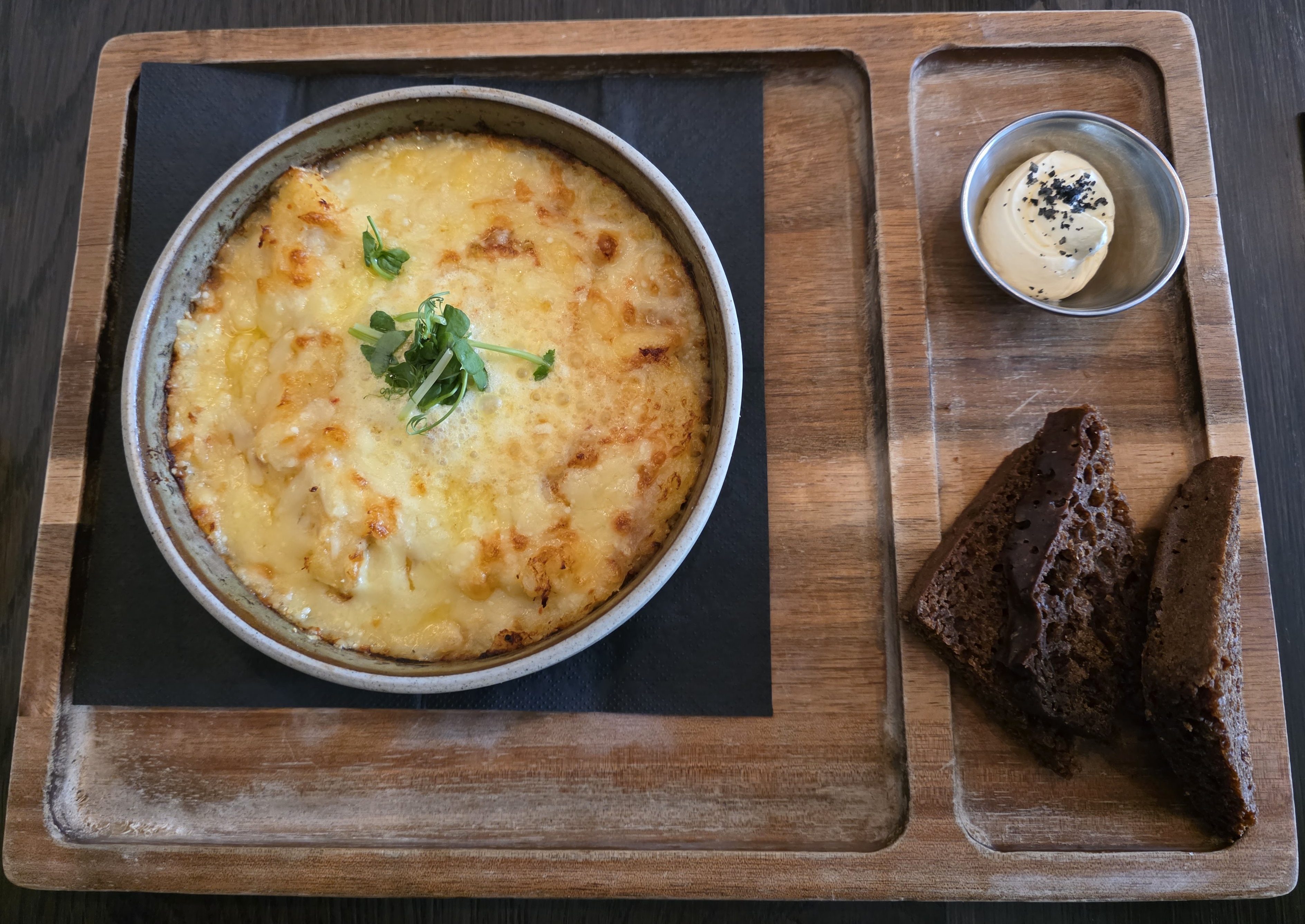
At the restaurant, I selected plokkfiskur (Icelandic fish stew). I have since learned that in homes this dish is made with leftovers, which reminds me of the bubble and squeak my mum and her family would make, but instead of leftover potatoes and brussels sprouts, it is made with leftover fish and potatoes in a bechamel. Restaurants obviously aren’t relying on leftovers, and they tend to zhuzh it up by adding cheese, as the restaurant I visited did. The stew consisted of cod, potatoes, and Feykir cheese, served with rye bread with butter. The stew was thick and cheesy, and the richness of the potatoes and butter was an interesting contrast to the flaky, delicate, subtly flavored fish.
Pylsur (Icelandic Hot Dogs)
If you’ve ever researched Icelandic food for any length of time, you’ve probably encountered Bæjarins Beztu Pylsur, the famous hot dog stand once patronized by figures like Bill Clinton and Anthony Bourdain for an episode of No Reservations (side note: this episode taught me a lot about Icelandic cuisine and tradition, and I would recommend checking it out). Though this might be Iceland’s most iconic place to get a hot dog, it is by no means the only one. You throw a rock in downtown Reykjavík, you’ll likely hit a place that serves hot dogs, and I was able to find one within a few minutes from my hostel.
With its careful, considered construction and focus on balancing textures and flavors, I’m not exaggerating when I say this hot dog was a work of art. The lightly toasted bun provided a sturdy base and a slight chew without being too hard. The tomato sauce added a bright sweetness, while the crispy onions added a satisfying crunch. The hot dog itself was a blend of beef, pork, and lamb, encased in a reddish skin. When I bit into it, the casing snapped satisfyingly around the soft, savory center. The dog was topped with Icelandic mustard and a creamy remoulade. Usually, I’m skeptical of mustard, the deep tang coating my mouth and overwhelming everything else, but here the tang was welcome, not overpowering and harmonizing with the other flavors.

A Bonus Round…About Bónus
If you are planning a trip to Iceland, you should know that food is expensive, particularly when you go out to eat. This is due to a combination of factors. First, Iceland is remote, so foreign goods must arrive via boats or planes, and the cost of that shipping transport trickles to consumers. And a lot of the food consumed in Iceland has to be imported. Although Iceland produces plenty of lamb and fish and some vegetables that can be grown in greenhouses, its land and harsh conditions aren’t ideal for farming, so many ingredients and goods must be imported. That’s not factoring in the VAT and high labor and operating costs.
To put those prices into further context, in May 2026 the lamb soup cost around 2990 Icelandic Króna, which was about $25, and the stew in the restaurant at dinner time was 5600 ISK, about $45. Even the hot dog was 1290 ISK, which is around $10. Though the local food was delicious, and I would have happily eaten those pylsur for every meal, it was too pricey to eat out for every meal. To be clear, if you want your money to go further, I suggest buying groceries and only eating out for a select few meals in any country you visit, but I found this to be especially true in Iceland.

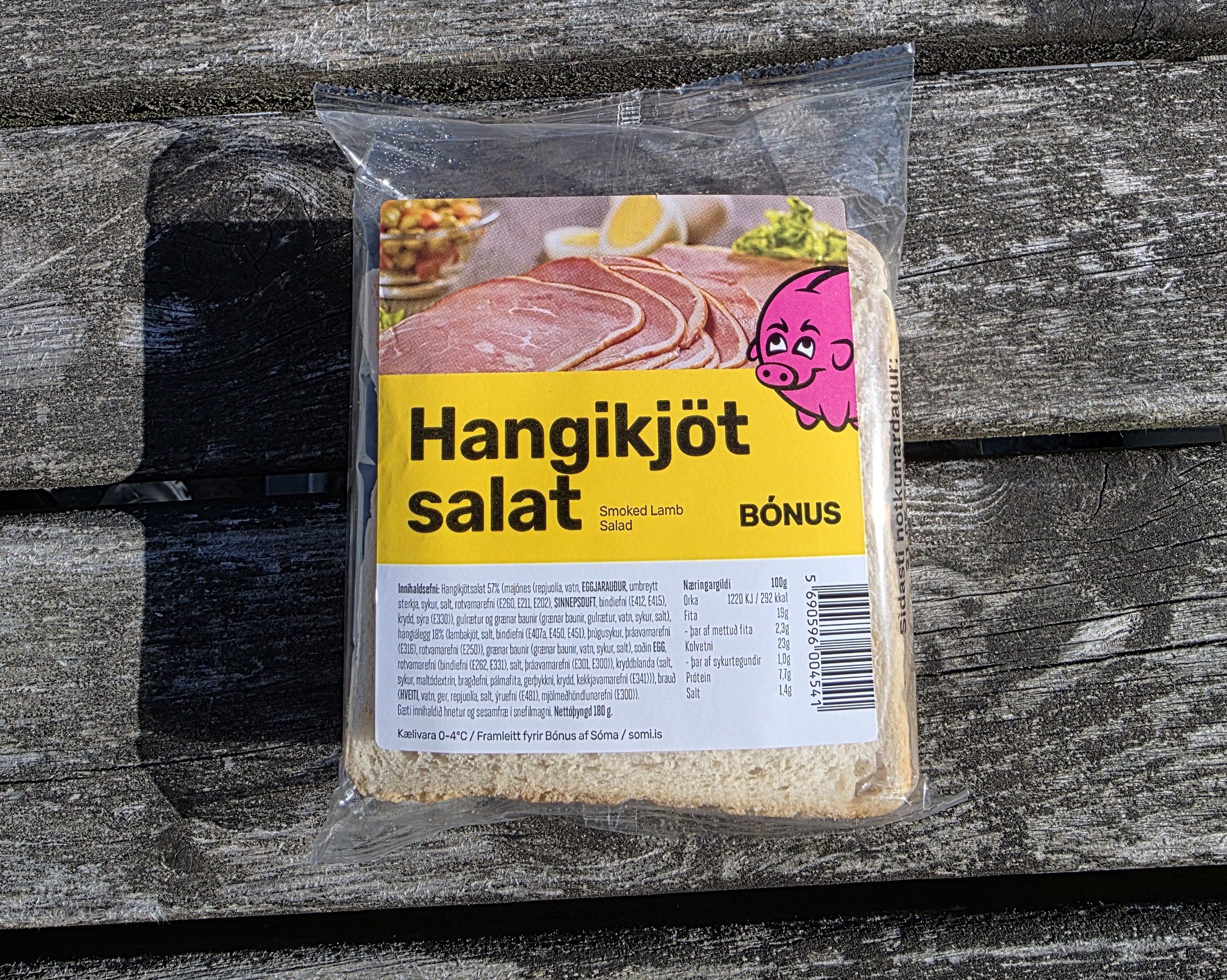
During my time there, I made a few trips to the local discount grocery store, Bónus. Known for its giant piggybank mascot and comparatively low prices, I appreciated having one close to my hostel. I always enjoy going into grocery stores in different countries and seeing how each place is a little bit different in terms of layout and products. Bónus, for instance, had fully refrigerated rooms, one for the dairy products and another for produce. The food is also reasonably priced as well as reasonably tasty. On one trip I got a pack of four apples, a box of Corny granola bars, and a sandwich all for about 1900 ISK, about $13. Those still might not be the cheapest prices I’ve seen, but it beat paying through the nose for every meal at a restaurant. For lunch, I often found myself getting the hangikjöt salat (smoked lamb salad sandwich), made with lamb, mayo, peas, and carrot cubes. Though it was by no means my favorite meal in Iceland, it was perfect to take down to the water and munch on while I watched the waves.
Side note, when I was at a local bookstore, I learned that Bónus is so beloved that it inspired a collection of poetry, which I now regret not buying.

Find Out More
As you can see, I had a wonderful experience with Icelandic food without eating vulnerable whales, sharks, and puffins. Throughout this post, I have linked to sources that informed my decision not to eat these animals and helped me in writing this post. I was also influenced by the following sources, which you can check out if you’d like to learn more: