

During the German leg of my trip, I was lucky enough to stop in several cities, including Hamburg, Frankfurt, and Cologne, where I experienced the culture, met people, and, of course, tried the food. I left knowing I’d only skimmed the surface of German cuisine, but I tasted enough to know that Germany has some truly incredible food.
Quick side note for my grammar nerds: in German nouns are capitalized, so I’ve kept that convention when I’m using German nouns throughout this post.
Backfisch Sandwich
Hamburg is a major port city with a bustling waterfront, where operational piers, tour and dinner boats, and restaurants and food stands sit side-by-side. The proximity to water makes seafood a staple of the area, particularly fried fish. At the waterfront, I stopped at one of the food trucks serving Backfisch sandwiches. The sandwiches had a generous fillet of fish fried to perfection, stretching over the edge of the bun. The coating was crisp and hot, and steam rolled off the white flesh when I bit through the breading. The leafy lettuce and tangy tartar sauce cut through the crunchy fried fish. It was the ideal sandwich to munch on while looking out over the water, watching as people walked by.

Schnitzel with Grüne Soße and Apfelwein
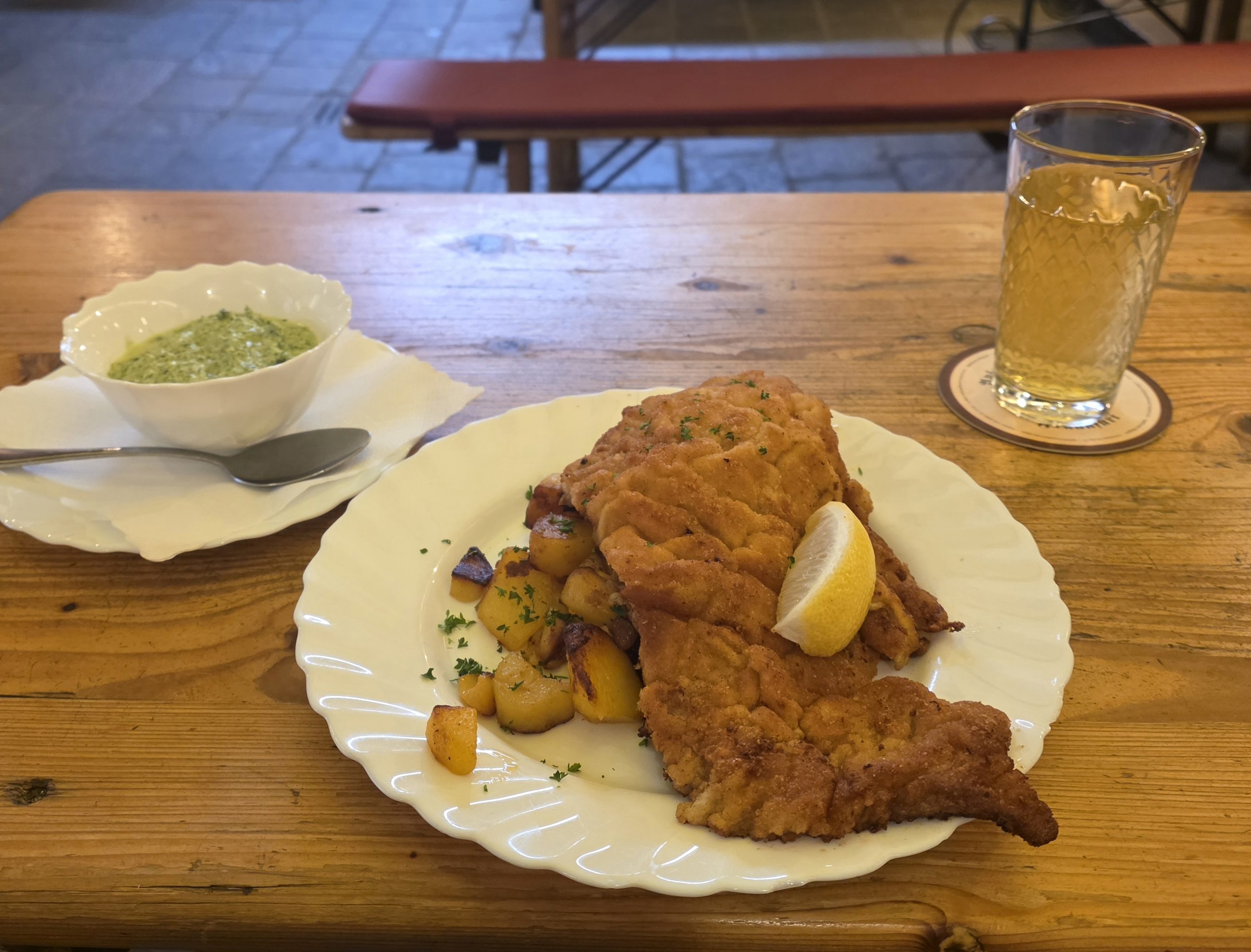
I was only in Frankfurt for a day, enough time to hit up the most well-known sites, visit the Goethe house, and try a couple of the local classics: Apfelwein (apple wine) and Grüne Soße (green sauce). It was chilly and drizzling in Frankfurt, and I was hungry after a morning of sightseeing. I found a restaurant and took a seat at the end of one of the long tables and ordered veal schnitzel with Grüne Soße and potatoes, along with a glass of Apfelwein.
They served the Apfelwein in a diamond-ribbed tumbler. The wine was golden yellow, looking as crisp as the apples from which it came. I took a sip, expecting sweetness, for it to taste like it smelled, like apple juice. Instead, the drink was sour and tart but still lovely and refreshing, something I enjoyed until the schnitzel meal arrived. If I’m remembering correctly, this was my first time having schnitzel, and it tasted even better than I imagined. The meat had been pounded thin, making it nice and tender, and the coating was golden brown, giving way with a satisfying crunch to the juicy meat. After tasting the schnitzel by itself, I drizzled on the sauce. There are very specific guidelines to make Frankfurt’s traditional Grüne Soße, which must consist of seven specific herbs: parsley, chives, chervil, borage, salad burnet, sorrel, and cress. Those making the sauce must also mind the ratios, as there is a rule that one herb cannot account for more than 30% of the mixture, which was cold and creamy and added a fresh brightness to the meal.
Currywurst
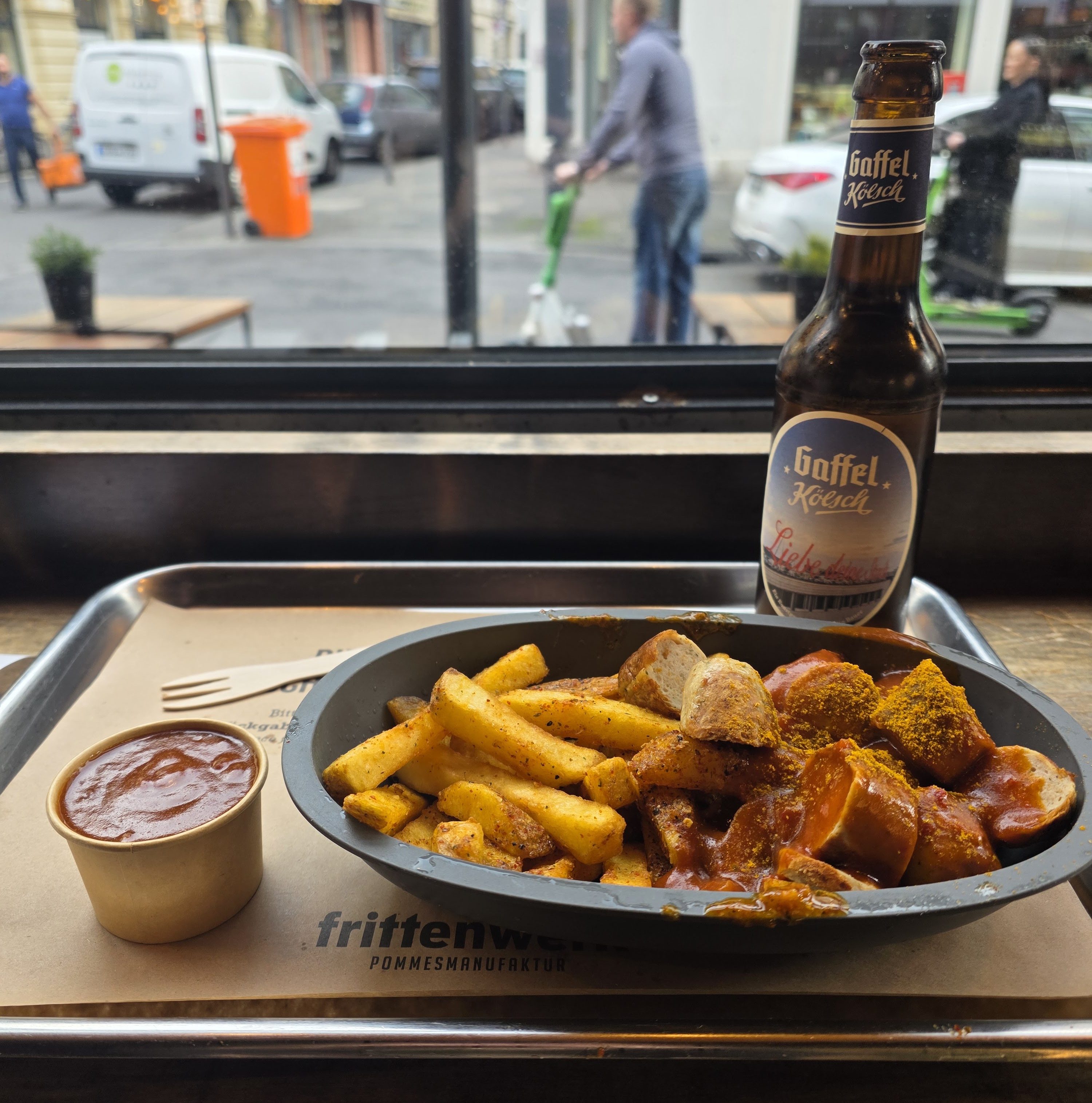
Currywurst is a famous German fast-food dish consisting of a sliced pork sausage smothered in a spiced ketchup and curry powder, and I was told it was an essential food to try in Germany. I was in Cologne, my final stop on the German leg, and wanted to get one in Germany while I had the chance. When I did a quick Google of a place to grab it nearby, the closest and cheapest option was fast-food restaurant called Frittenwerk, a German chain known for selling loaded fries. As someone who always got chili cheese fries at the bowling alley and considered her first time trying poutine to be a religious experience, I was more than happy to check it out.
I ordered the currywurst with pommes and a Gaffel Kölsch, mainly for the novelty of being able to order a beer at a fast-food place, which is not something we get to do back in the States. On my receipt I was given a character name instead of a number, which I thought was smart because it overcame any potential language barriers. They called my name “Jar Jar Binks,” which made me think of the Star Wars nerds in my life back home and gave me a pang of homesickness. But I collected my generous portion of fries, sausage, and sauce and they popped off the cap from a bottle of beer, and that pang was replaced by hunger. I found myself a seat at the bar near the window, allowing me to people watch as I dug in.
The sausage was delicious. The casing was nicely browned and crispy, creating a soft, juicy center. The sausage is sliced into pieces small enough that you can spear them with the wooden fork provided but big enough that you get a satisfying, warm bite. The sausage is smothered in a thick, smooth sauce and there was a liberal sprinkling of curry powder. The combination was a savory, tangy flavor and there was a pleasant warmth that danced around my mouth. The fries were fresh, hot, and with that balance of crispy shell but a fluffy middle, and they were even better when dipped in the aromatic and acidic sauce. If I lived here, this would easily be in my rotation of takeaway meals.
Kölsch
Since the Germans are known for their beer and Cologne is famous for its Kölsch in particular, I wanted to learn as much about the experience as possible. I joined a local tour that allowed us to visit several brewhouses and learn about how Kölsch is made and served. There’s a very specific culture associated with Kölsch and, though I had learned about some of it from our guy Anthony Bourdain, there was something nice about joining a local who was passionate and knowledgeable about Kölsch.
We met where most tours meet in Cologne, outside the Dom. Cologne was an important city in the Holy Roman Empire, and the Dom was constructed to house what is believed to be the remains of the Three Magi, making the cathedral a major pilgrimage destination. The Gothic cathedral is imposing and grand, its twin spires looming over spectators. The darkened, weathered exterior of the church adds to the drama. The porous sandstone used to construct the church reacts to the sulfuric acid in rain, causing it to darken, a darkness that was further exasperated by soot and pollution.

From the Dom, we visited three different brewhouses, at each place learning about their history and different aspects of Kölsch. The brewhouses are spacious but the amount of people in them, at least when we went, made them feel full and alive. There are no TVs, music isn’t playing, and even card games are not allowed. The wooden panels on the walls are dark and warm, and the room is minimally decorated, creating an intimate atmosphere with limited distractions, a place where people connect, talk, and drink.
We learned about the strict rules that define Kölsch. Kölsch is made under the German beer purity law, under which the beer must consist of only four ingredients: hops, malt, water, and yeast. Under the Kölsch Convention, Kölsch must be a pale, highly attenuated, top-fermented beer brewed in Cologne or at permitted breweries outside the city limits. The fermentation process results in a delicate beer best consumed when cold and fresh. To ensure the beer is finished before getting warm, Kölsch is served in a Stange, a tall, slender glass, holding 200 ml of beer. The servers in the brewhouses, Köbesse, carry trays of these glasses. Each time someone finishes their drink, a Köbes places down a fresh one and puts a tick mark on the coaster to keep a running tally of how many the customer has had. When the customer has had enough, they place the coaster on top of their glass, signaling they are done drinking and to not bring them another. Each brewery tweaked its ratios slightly, so some may have tasted hoppier than others, but each created a lovely, clean, crisp beer that was light and easily drinkable.
Reibekuchen
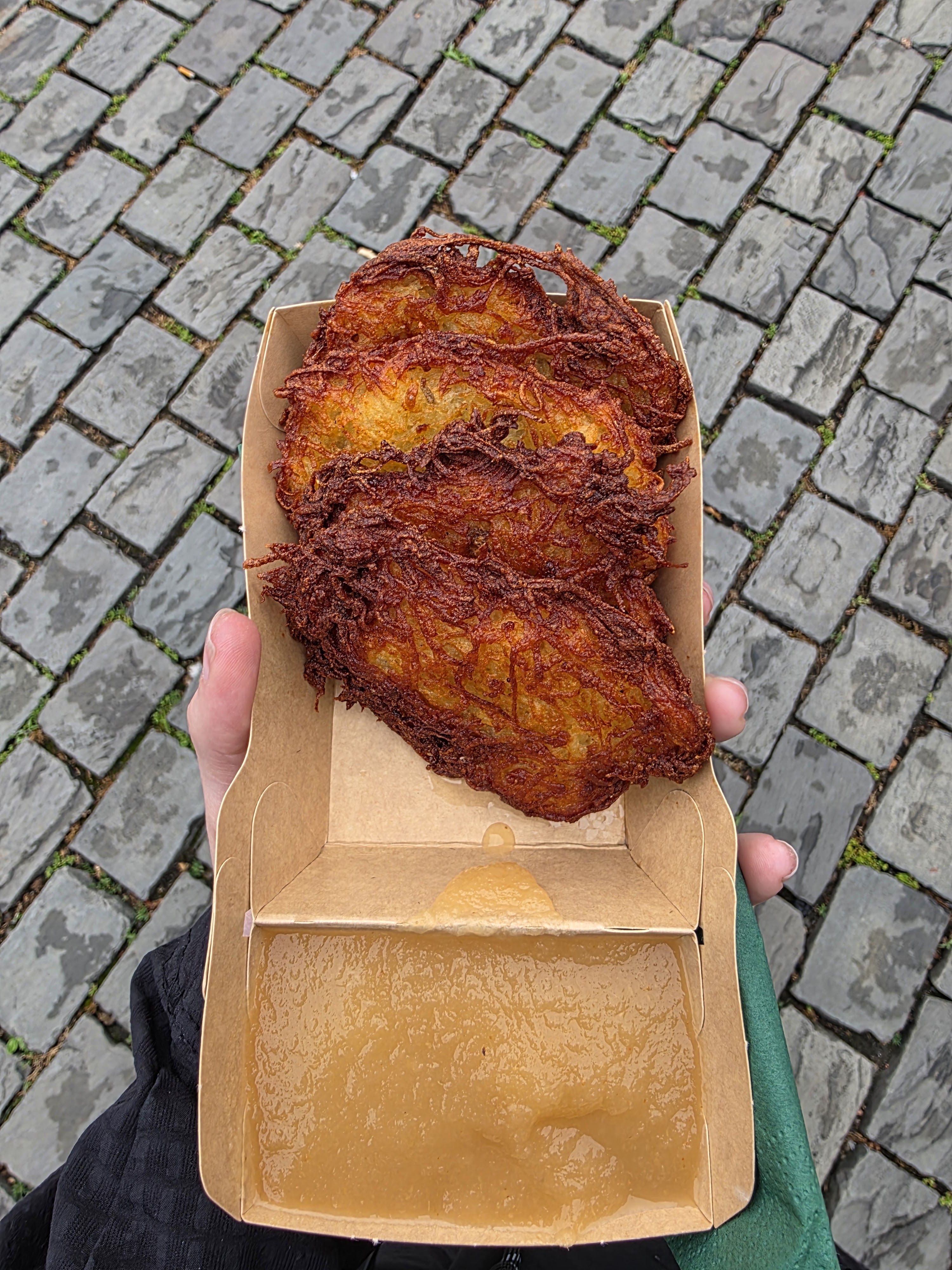
After drinking multiple glasses of Kölsch, I was ready to have a nice snack, and I went to seek out another staple of Cologne: Reibekuchen. Reibekuchen are potato pancakes, made of grated potatoes, onions, and eggs and fried until crispy and a deep golden brown and served with Apfelmus (sweet apple sauce). If you know me at all, you know I’m an absolute slut for potatoes and I couldn’t think of anything better to help me regain my equilibrium.
I had heard the best place to get these crispy little beauties was at Rievkoochebud in Old Town, conveniently near where the tour ended. Rievkoochebud is a small, unpretentious food stand, where you walk up to the window that overlooks the street and place your order. Inside is a small, steamy kitchen filled with the aroma of potatoes and the popping sizzle of oil. You are given your serving of potato cakes and a generous helping of applesauce. The golden potatoes were delicious with the sweet-tart applesauce. Their texture struck a satisfying balance between crispy edges and a soft, pillowy interior. Each order includes four cakes, and I would have happily ploughed my way through a dozen more.
Bratwurst
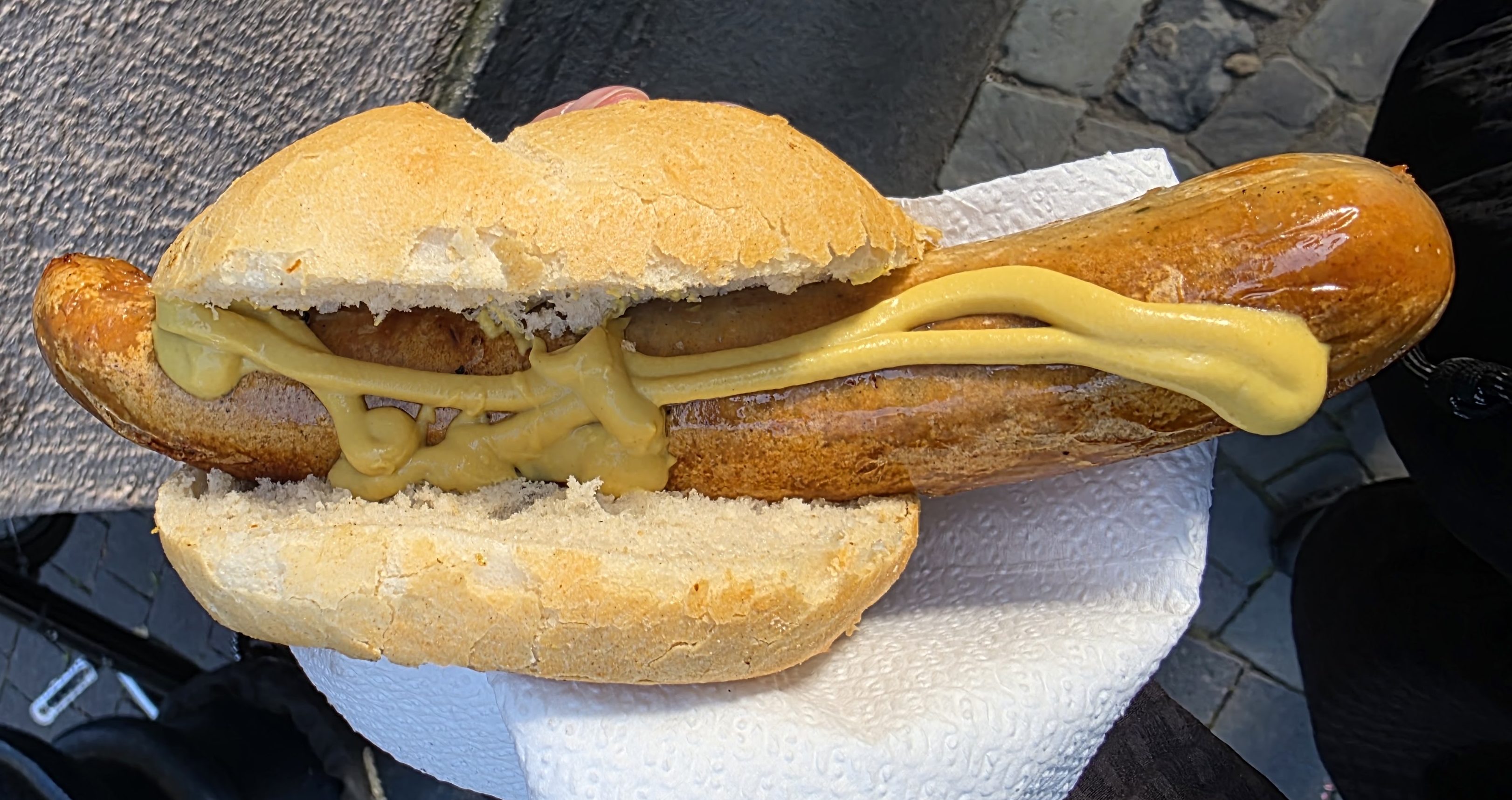
I picked up a bratwurst from a place not unlike Rievkoochebud. The restaurant was a small establishment, the window of the kitchen overlooking the street, but this one had a small room where we could order at the counter and wait for our food. The man working grilled up the brats and topped them with a sauce of our choosing. I chose mustard, keeping it classic. The sausage was perfectly grilled on all sides and nestled in the folds of a thick, crusty bun. It was savory and juicy, the sharp tang of the mustard cutting through the meat without being overpowering. When I’ve had brats at barbeques back home, they were often had a chunky and stringy texture that I did not particularly enjoy. But this was smooth and tender texture, making it easier to chew and I was less likely to get pieces lodged in my teeth. Eating it didn’t feel like work but like a treat. And it may not have completely converted me to a mustard lover…but it came close.
Hungry for More
This trip through Germany just reaffirmed one of the things I love most about food and travel. The best, most memorable foods rarely come from higher-end places that cater to the select few. Instead, they come from places accessible to ordinary people, shaped by the memories and traditions of the people who eat them. From crisp Backfisch in Hamburg to Frankfurt’s herby Grüne Soße and Cologne’s currywurst, Kölsch, Reibekuchen, and bratwurst, each dish offered a delicious glimpse into the place that produced it. I was sad to leave it behind, knowing I’d only dipped my toe in the water, but I left hungry to return.